
Is The WordPress Interactivity API Enterprise-Ready?

You’re evaluating frontend solutions for your WordPress-based platform. Your team needs dynamic interactions, but you’re tired of managing multiple JavaScript frameworks, dealing with complex state management, and the overhead that comes with external dependencies.
Sound familiar? We’ve been there too.
The WordPress Interactivity API keeps appearing in technical discussions, but there are only a few real-life use cases available to review at enterprise scale. As technology decision-makers, you need to know: Is this actually ready for production use in an enterprise environment?
Here’s what we’ve learned from a year of real-world testing.
What You’re Actually Evaluating
The WordPress Interactivity API is a framework for dynamic interactions that’s been in WordPress core since version 6.5. It handles component state, data binding, and user interactions without external libraries. Think tabs, accordions, dynamic forms, or any component where user interaction changes what’s displayed.
Instead of reaching for React or Alpine.js every time you need user interaction, you get a lightweight framework that integrates directly with your existing WordPress infrastructure.
WordPress created this API to solve a specific problem: the challenge of binding front-end to back-end data without external frameworks. If you’ve ever tried to make WordPress data work smoothly with React, you know the pain. Complex setups, state management headaches, and build processes that feel like overkill for simple interactions.
The Interactivity API puts the logic back in your templates, where your WordPress team already works.
Production Readiness: What We’ve Observed
After implementing the API across multiple client projects over the past year, here’s our honest assessment.
It’s past the experimental phase. Currently running on WordPress since version 6.5, with growing enterprise adoption and improving documentation. It’s not as battle-tested as React or Vue, but it’s stable enough for production use.
Technical debt reduction is real. By keeping development within the WordPress ecosystem, you can leverage existing WordPress talent instead of hiring React specialists. Your WordPress developers can adapt to this approach more easily than learning entirely new frameworks.
Performance is better. Fast initial page loads, minimal JavaScript bundle, and tight integration with WordPress caching systems. No more loading states while waiting for data. Components render almost instantaneously because the initial state is rendered server-side.
But scalability requires planning. The API handles standard interactive components well, but you need careful architectural thinking as complexity grows. You have to be smart about architecture to prevent issues when scaling.
How It Stacks Up Against the Alternatives
We’ve compared the Interactivity API against other popular frameworks that we’ve used a lot across many use-cases.
WP Interactivity API Versus React/Vue: Less mature ecosystem, but it eliminates the complexity of setting up separate build processes and API layers for WordPress data. The learning curve is much smaller for WordPress teams.
WP Interactivity API Versus Alpine.js: Similar approach, but with better WordPress integration. Alpine might be more flexible for non-WordPress projects, but the Interactivity API offers deeper WordPress ecosystem benefits.
WP Interactivity API Versus jQuery: More structured approach with better maintainability. Minimal overhead increase but significantly better developer experience.
The integration story is compelling. Works within existing WordPress hosting environments, with no additional infrastructure requirements, and no separate build processes needed.
Note: For a more in-depth comparison, see the official Interactivity API FAQs here
Real-World Testing: What We’ve Built
We’ve deliberately pushed the Interactivity API’s limits to understand where it works well and where it doesn’t.
Case Study: Multi-Site Email Subscription System
A client needed flexible subscription forms across their multi-site network with third-party EDM API integration. Requirements: dynamic validation, form submission, thank-you messages, and integration with their marketing platform.
The traditional approach would have required external frameworks, complex state management, and potentially separate plugins.
Our Interactivity API solution? A single reusable component with server-side rendering and native WordPress integration. The form handles real-time validation, integrates with their third-party marketing platform, and works across multiple sites from a single codebase.
What struck us most was the development speed. Tasks that typically require coordination between frontend and backend teams became straightforward template implementations.
Advanced Implementation: Interactive Camera Demo
We also built a complex interactive camera demonstration, deliberately testing the API’s limits. This project revealed both the framework’s capabilities and its constraints. It handled the complexity well, but certain architectural decisions needed to be made upfront.
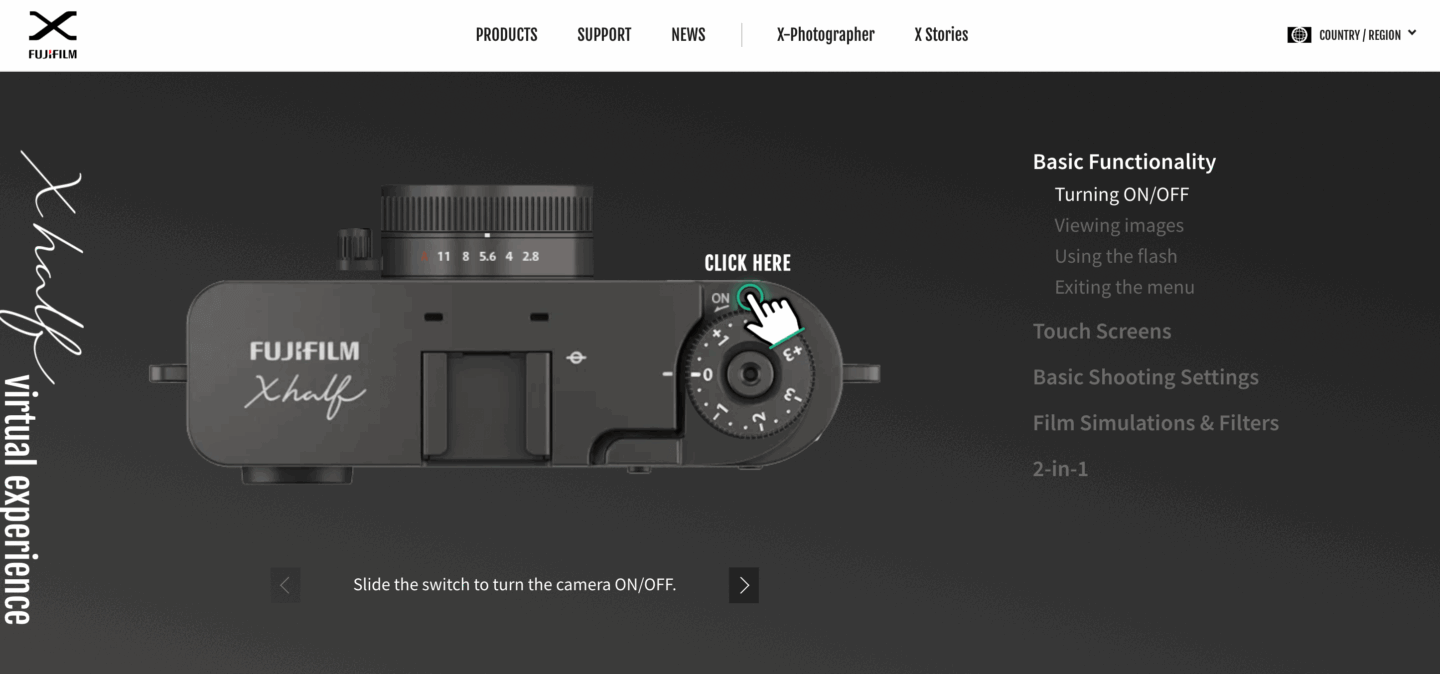
Fujifilm x-Half Virtual Experience using the Interactivity API
Here’s what else The Code Company has to say about the Interactivity API…

The WordPress Interactivity API is a welcome addition to the WordPress ecosystem. After putting it through its paces on an incredibly complex, interactive visual experience for Fujifilm, we were especially impressed by its performance and ease of use on even the most complex of projects.

I used the Interactivity API to build an interactive camera section for the Fujifilm site, where we needed to manage states between different scenes and trigger animations tied to each section. The learning curve felt pretty manageable as long as you’re familiar with basic state management concepts.
When It Makes Sense (And When It Doesn’t)
Based on our testing, here’s when the Interactivity API works well:
Good use cases for the Interactivity API
The Interactivity API is ideal for dynamic components for your project.
- Interactive UI components: tabs, accordions, sliders, photo galleries
- Dynamic forms with real-time validation
- Navigation systems, mobile menus and dropdown menus
- Content features: Social share popups and content filtering
- WordPress blocks that need to share data or interact with each other
The Interactivity API makes sense when…
- Your technology stack is WordPress-centric
- Your team has a strong WordPress background
- You need standard interactive components
- You prefer reduced external dependencies
- You want to leverage existing WordPress talent across more projects
It is best to consider alternatives when…
- Building complex applications like rich analytics dashboards
- You have multi-platform frontend needs beyond WordPress
- Your teams are already specialised in React/Vue
- You need React’s mature ecosystem for complex state management
The framework’s strength (simplicity and WordPress integration) can become a limitation for complex applications. If you’re building sophisticated tools or complex single-page applications, React’s ecosystem still offers advantages.
Implementation Strategy That Actually Works
Start small. Some WordPress core blocks already use the Interactivity API, so your team might already be working with it without knowing it.
Our recommendation: audit your current interactive requirements, then run a small-scale evaluation with your existing WordPress developers. This lets you assess both technical fit and team adoption without significant risk.
The learning curve exists, but it’s shorter than adopting external frameworks. Most developers familiar with similar approaches adapt quickly to the API’s patterns.
The Bottom Line
The WordPress Interactivity API represents a production-ready solution for WordPress-focused environments, particularly for teams prioritising ecosystem cohesion over maximum flexibility.
Sometimes the best technology decision isn’t about adopting the latest framework. It’s about finding solutions that work within your existing ecosystem while reducing long-term complexity.
If your technical strategy centres on WordPress and you value ecosystem integration over maximum flexibility, the Interactivity API offers a genuine path to simpler frontend architecture. For complex applications or framework-agnostic needs, traditional options still provide more mature tooling and flexibility.
The question isn’t whether the WordPress Interactivity API is perfect. It’s whether it solves real problems for your specific context. In our experience, for WordPress-centric organisations tired of managing multiple frontend frameworks, it often does exactly that.
Ready to evaluate whether the Interactivity API fits your technology stack?